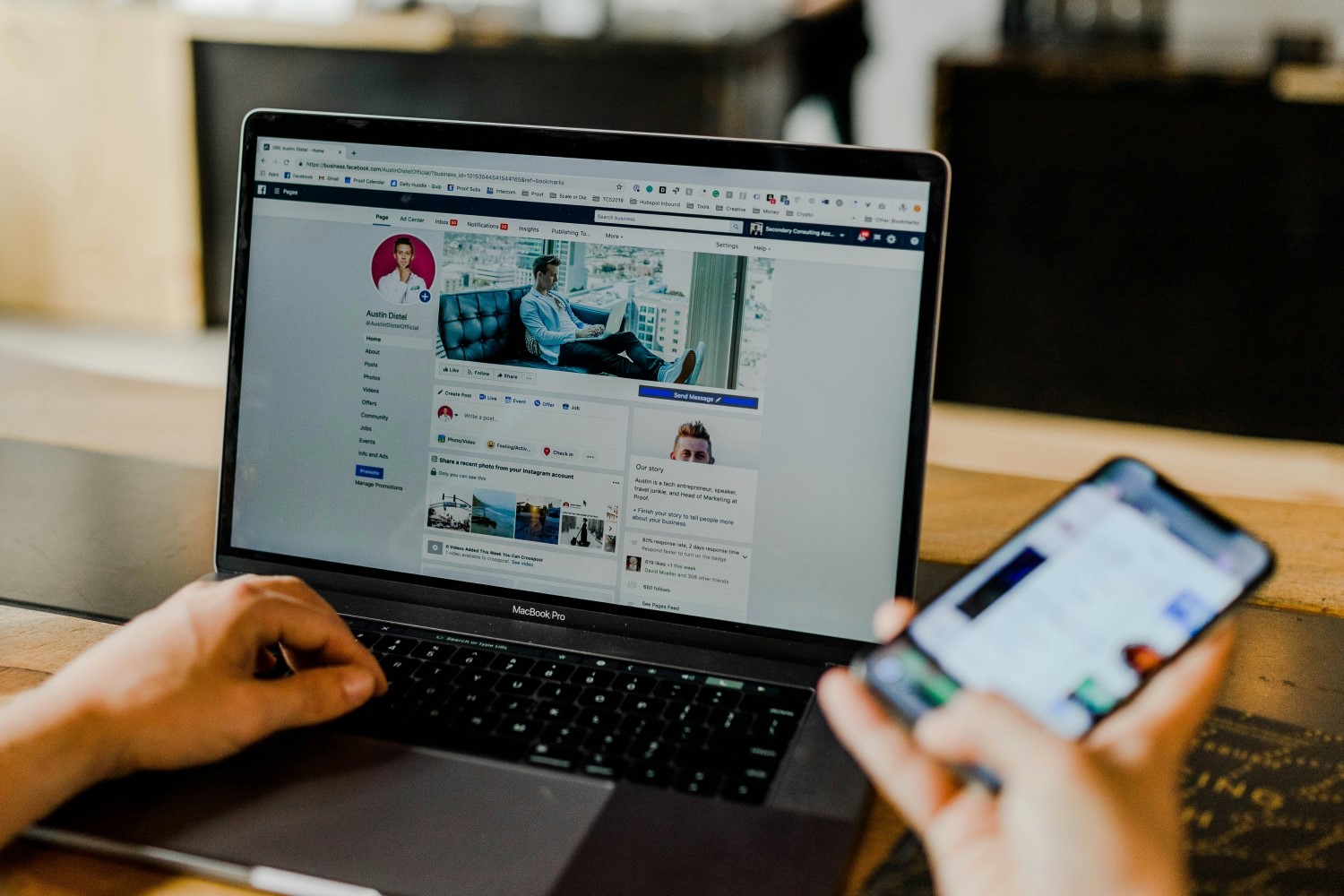
A polished profile used to do a lot of work on its own. A clear headshot, a few years of posts, a tidy bio, maybe a verified badge — that was often enough to make an account feel real. That instinct still exists, but it is much less reliable than it used to be.
AI has changed both sides of the equation. It helps platforms, brands, and security teams detect suspicious behavior at scale. It also helps bad actors create more convincing personas: cleaner profile photos, more fluent captions, more believable posting patterns, even synthetic media that looks casual rather than obviously fake. The result is a strange shift in digital trust. Online verification is no longer about asking whether a profile looks authentic. It is about asking whether the account holds together under closer inspection.
The old visual shortcuts are getting weaker
One reason social media verification feels harder is simple: surface quality is cheap now. A fake Instagram account does not need stolen photos and clumsy captions anymore. It can use AI-generated headshots, lightly edited images, rewritten bios, and a voice that sounds consistent enough to pass a quick glance.
That does not mean every polished account is suspicious. It means the old shorthand is losing value. A good-looking profile picture is not evidence of a real person. A steady stream of captions is not proof of genuine activity. Even a blue badge has a narrower meaning than many users assume. It may tell you that a platform has verified something about the account, but it does not automatically answer every question about credibility, motives, or off-platform claims.
What AI is actually doing in profile verification
For platforms and security teams, AI social media verification is mostly about pattern recognition. Systems can flag behavior that looks unusual at scale: account creation bursts, repetitive engagement, mismatched language patterns, suspicious follower growth, recycled profile elements, or networks of accounts behaving too similarly.
In more formal identity checks, AI is often paired with biometric tools and liveness checks. NIST’s digital identity guidance, for example, treats liveness detection as part of presentation attack detection — in plain English, methods meant to tell whether a biometric sample is coming from a live person at the point of capture rather than a replayed image or other spoof. That logic matters because a face is no longer enough on its own. Verification systems increasingly care about motion, timing, challenge-response behavior, and other signals that are harder to fake consistently.
On open social platforms, though, the job is messier. Most platforms are not running full identity proofing on every account. They are usually combining automated risk signals with policy enforcement, user reports, and human review. AI helps narrow the field. It rarely delivers a final answer by itself.
Why human review still matters
This is the part people often miss. AI is good at spotting patterns, but profile authenticity is full of edge cases.
A real account may have inconsistent posting because a team shares access. A creator may use editing tools heavily and still be entirely legitimate. A journalist or activist may keep parts of a profile deliberately sparse for safety. An account can change tone because the person moved countries, switched languages, or handed social media to an assistant. Those are exactly the kinds of situations where automated systems can produce false confidence in either direction.
That is why manual public profile analysis still matters. If you are checking whether an account is trustworthy, the useful questions are often small and concrete. Do Stories, captions, posts, and tagged content tell the same story over time? Does the account interact like a person or like a script? Are there sudden jumps in style, subject matter, or audience that need an explanation?
Sometimes the best step is simply to look more carefully at public material instead of making a snap judgment from the grid view. If a profile is public and you want to inspect Stories, captions, or posting context without logging in, a lightweight insta story viewer such as StoriesIG can be useful for that quick manual pass. Not because it “proves” anything, but because context usually matters more than a single screenshot.
Digital trust is shifting from appearance to provenance
A second shift is happening underneath all this. More organizations now care not just about what content looks like, but where it came from and what happened to it along the way.
That is the promise behind content authenticity efforts such as C2PA Content Credentials. The basic idea is straightforward: attach verifiable provenance information to digital media so viewers can inspect its origin and edits, almost like a record of custody for content. OpenAI, Adobe, and other companies have publicly supported this direction because the internet needs better ways to trace media history than naked visual judgment.
Still, provenance is not magic. Metadata can be stripped. Many legitimate images and videos will never carry credentials. And the absence of provenance data does not mean a post is fake. It is better to think of content authenticity as one more useful signal in a broader verification workflow, not a final verdict stamped onto every file.
What a better verification habit looks like
Whether you are a marketer vetting a creator, a recruiter reviewing a public profile, a journalist checking a source, or just a user trying not to get fooled, the process is starting to converge around the same habit: stack signals instead of trusting one.
That means looking at a profile from several angles at once. Platform-level cues matter. Public behavior matters. Cross-platform consistency matters. Reverse image searches can matter. Provenance markers may matter. So can the simplest question of all: if this account were fake, what would feel just a little too neat?
The strongest form of digital trust online is no longer instant recognition. It is consistency. A real profile tends to accumulate small, boring signs of life that are hard to manufacture for long: ordinary interactions, believable continuity, natural variation in tone, traces across time, and content that fits the claimed identity without feeling perfectly engineered.
The new standard is not certainty
People often want one clean test for how to verify a social media profile. There usually is not one. That can feel unsatisfying, but it is probably the more honest standard.
AI has made deception easier, but it has also made verification more layered and more mature. We are moving away from the old habit of trusting whatever looks polished and toward a more careful model built on AI identity signals, manual review, and content authenticity checks. That is a healthier direction, even if it demands a little more patience.
A trustworthy profile now earns belief the same way a trustworthy person does: not through one polished introduction, but through repeated, coherent evidence over time.
Tim Absalikov, an acting CEO of Lasting Trend, is a digital marketing professional with a deep understanding of everything from technical SEO to intuitive UX and UI. Having worked with clients such as LaptopMD and World Education Services, he’s known for spearheading consistent, effective marketing strategies.