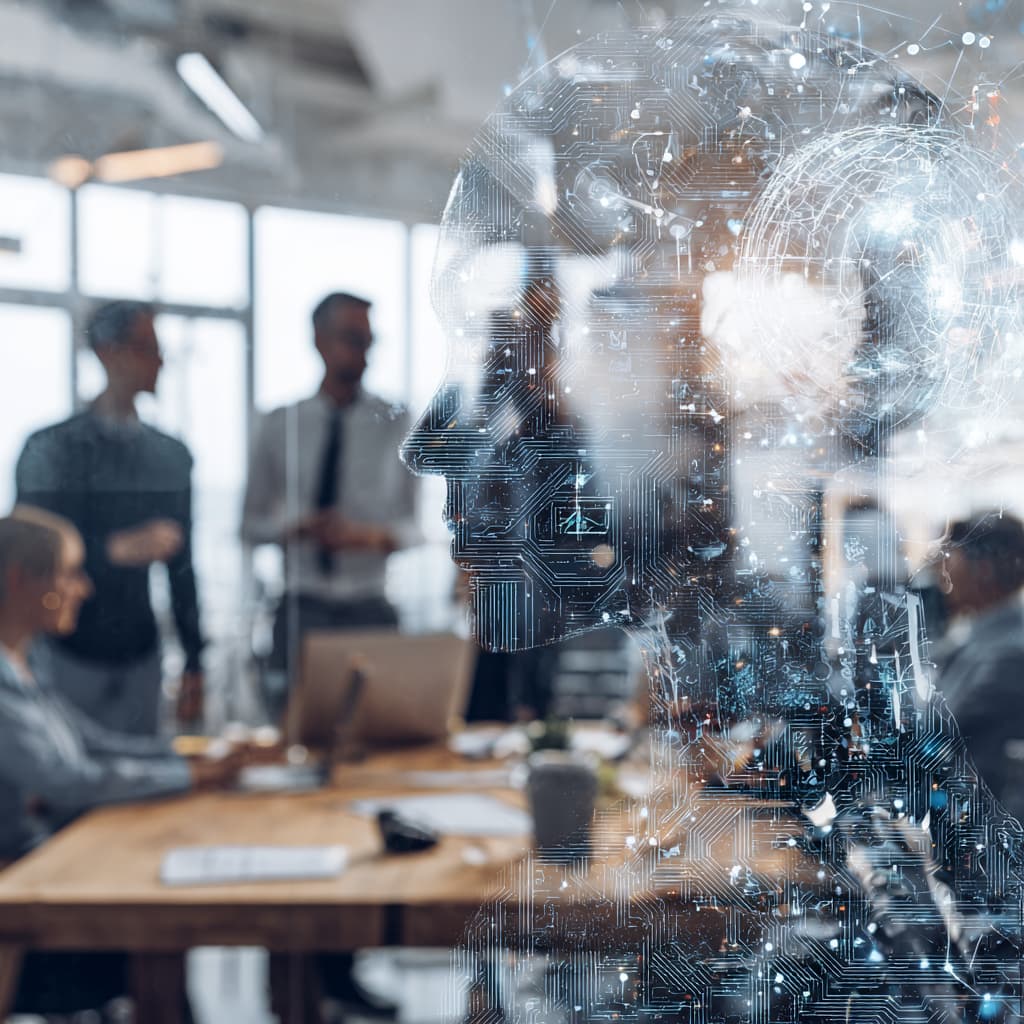
For years, discussions about artificial intelligence in the workplace focused primarily on productivity. Companies viewed AI as a tool for automating repetitive tasks, accelerating data analysis, improving customer support, and reducing operational costs. The assumption was relatively simple: AI would help employees work faster and more efficiently while leaving the broader structure of the workday mostly unchanged.
That assumption is beginning to collapse.
As AI systems become integrated into everyday corporate environments, they are no longer affecting only isolated tasks. Increasingly, AI is reshaping the rhythm of the corporate day itself – the pace of communication, the timing of decisions, the structure of meetings, the expectations around responsiveness, and even the psychological experience of work.
The result is a subtle but significant transformation of workplace culture.
AI is changing not only what employees do, but how organizations experience time.
The Corporate Day Is Becoming Faster and More Continuous
One of the most immediate effects of AI integration is acceleration. Tasks that previously required hours of preparation can now be completed in minutes. Reports are generated instantly, presentations are drafted automatically, summaries appear immediately after meetings, and data analysis that once took days can now happen almost in real time.
At first glance, this seems entirely positive.
However, increased speed also changes organizational expectations. When information becomes available faster, companies begin expecting decisions faster as well. Employees receive more requests, more updates, more AI-generated insights, and more communication throughout the day because the technical barriers to producing information have been reduced dramatically.
The corporate day becomes denser.
Earlier workplace rhythms often included natural pauses created by manual processes:
- waiting for reports;
- preparing presentations;
- reviewing documents;
- gathering research;
- organizing information.
AI compresses many of these slower intervals. As a result, organizations increasingly operate in near-continuous response mode.
Employees are expected to react quickly because the systems around them now move quickly.
AI Changes the Meaning of Meetings
Meetings themselves are also evolving. AI tools can now summarize conversations, generate action items, transcribe discussions, and even suggest strategic recommendations during live collaboration sessions.
This changes the function of meetings inside organizations.
Earlier corporate meetings often served partly as information-sharing events. Participants gathered because information needed to be explained, documented, or clarified manually. AI systems reduce much of that administrative burden automatically.
As a result, meetings increasingly shift toward rapid decision-making rather than collective information processing.
At the same time, employees may experience new forms of pressure. When AI systems generate summaries instantly, conversations feel more permanently recorded and operationalized. Informal discussions become structured outputs almost immediately.
This can subtly alter communication behavior.
Employees may become more cautious, more performance-oriented, or more strategically concise because AI transforms spoken interaction into searchable organizational memory in real time.
The rhythm of collaboration becomes tighter and more accelerated.
The Boundary Between “Working Time” and “Thinking Time” Is Shrinking
Another major change involves cognitive space. Traditionally, many forms of knowledge work required periods of slower reflection. Employees often needed time to organize ideas, review information carefully, and gradually develop responses.
AI systems reduce the visible need for that delay.
Drafts appear instantly. Suggestions arrive immediately. Analysis can be generated on demand. As a result, companies increasingly normalize shorter turnaround times for tasks that previously involved longer cognitive cycles.
This creates a new workplace dynamic where “thinking time” becomes less visible organizationally.
Employees may still require reflection internally, but the surrounding systems encourage continuous output. AI creates the impression that work itself can happen almost without interruption because technical production barriers have become extremely low.
The danger is not only overwork, but cognitive compression.
Organizations may gradually lose tolerance for slower forms of reasoning because AI-assisted workflows create expectations of constant responsiveness.
AI Is Reshaping Communication Patterns
AI tools are also transforming communication rhythms inside companies. Many employees now use AI systems to:
- rewrite emails;
- summarize threads;
- draft responses;
- prepare reports;
- organize meeting notes;
- generate internal documentation.
This increases communication volume significantly.
When producing professional communication becomes easier, organizations naturally generate more of it. Employees receive larger quantities of AI-assisted messages, summaries, recommendations, and updates throughout the day.
Ironically, this can create new forms of informational overload.
The workplace becomes more efficient at producing communication than at absorbing it. Workers increasingly spend time filtering, prioritizing, and interpreting large streams of AI-generated or AI-enhanced content.
The result is a corporate rhythm that feels faster but not always clearer.
AI and the Emotional Tempo of Work
The influence of AI extends beyond operational processes into emotional experience itself. Workplace tempo strongly affects stress, attention, and psychological fatigue.
When every task accelerates, emotional recovery time often shrinks as well.
Many employees describe modern AI-assisted environments as mentally continuous. Because AI tools are always available, there is growing pressure to remain productive at all times. Waiting, pausing, or slowly developing ideas may begin to feel inefficient inside systems optimized for instant output.
This changes the emotional texture of corporate life.
Some organizations are already observing subtle forms of AI-related fatigue:
- constant context switching;
- rapid communication cycles;
- endless optimization;
- pressure to keep pace with automated workflows;
- difficulty disconnecting from productivity systems.
AI may therefore increase not only operational efficiency, but also psychological intensity.
Human Rhythms Versus Machine Rhythms
One of the deepest tensions emerging inside modern organizations is the difference between machine rhythm and human rhythm.
AI systems operate continuously, instantly, and without cognitive fatigue. Human beings do not.
Humans still require:
- reflection;
- emotional processing;
- recovery time;
- uncertainty;
- creative wandering;
- gradual understanding.
As AI systems become integrated into workplace infrastructure, organizations increasingly face a cultural choice: should human workflows adapt fully to machine tempo, or should companies preserve slower rhythms necessary for sustainable thinking?
This question is becoming more important as knowledge work itself changes.
Creativity, strategic judgment, negotiation, ethical reasoning, and long-term planning still depend heavily on human cognitive depth. If workplace rhythms become excessively accelerated, organizations may unintentionally reduce the very forms of thinking they claim to value most.
The Future Corporate Day
The future workplace will likely become increasingly shaped by AI-assisted timing. Meetings, reporting cycles, communication flows, and operational decisions will continue accelerating as automation spreads deeper into organizational life.
However, the most successful companies may not be those that move fastest at all times.
Instead, they may be the organizations that learn how to balance AI-driven efficiency with sustainable human cognitive rhythms. The challenge is no longer simply integrating artificial intelligence into workflows. It is understanding how AI changes the experience of time inside organizations themselves.
The modern corporate day is becoming more compressed, more reactive, and more continuous. As AI transforms the infrastructure of work, companies are beginning to discover that productivity tools do not merely optimize existing routines. They gradually reshape the pace, expectations, and emotional structure of professional life itself.